
Knowledge and Resources
How Does an EPC (DPE) Rating Impact Mortgage Pricing in France?
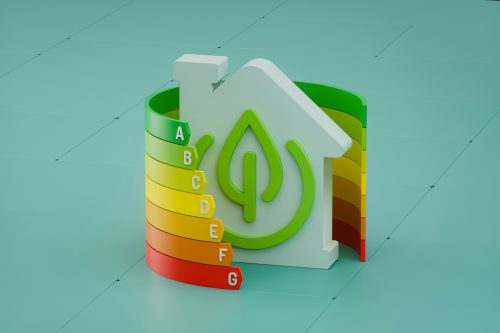
Not long ago, a property’s energy rating was a footnote.
Today, it’s a financial lever—one that can directly influence your mortgage rate, borrowing capacity, and even whether financing is approved at all.
For buyers in France, understanding how the EPC (DPE – Diagnostic de Performance Énergétique) impacts mortgage pricing is no longer optional. It’s essential.
EPC Ratings: From Technical Detail to Financial Driver
Every property in France is assigned an energy rating from A (most efficient) to G (least efficient).
But this isn’t just about energy bills or environmental impact anymore.
Lenders now treat EPC ratings as a core risk indicator, influencing:
- Interest rates
- Loan-to-value ratios
- Approval conditions
- Future resale and rental viability
In short: energy efficiency has become a credit factor.
Why Lenders Care: Risk, Regulation, and Value
From a lender’s perspective, an inefficient property introduces multiple risks:
1. Regulatory Risk
Properties rated G are already banned from rental as of 2025, with F-rated properties to follow in the coming years
This means:
- Reduced rental income potential
- Lower investor demand
- Increased risk of future illiquidity
2. Value Risk
Energy-inefficient homes often sell at a discount—sometimes significantly.
Buyers factor in:
- Renovation costs
- Future compliance obligations
- Higher running costs
This can affect the long-term value of the lender’s collateral.
3. Financing Risk
Banks are increasingly required to align with sustainability and ESG frameworks, meaning they must actively manage exposure to inefficient housing stock.
As a result, EPC ratings are now embedded directly into underwriting decisions
The Real Impact: How EPC Affects Your Mortgage Pricing
Strong Ratings (A–C): Preferential Treatment
Efficient properties are seen as lower risk and more future-proof.
Borrowers may benefit from:
- More competitive interest rates
- Higher loan-to-value ratios
- Smoother approval processes
Mid Ratings (D–E): Neutral, But Under Review
These properties are still broadly acceptable, but:
- Lenders may apply additional scrutiny
- Future regulation is already tightening (E will be impacted longer term)
Poor Ratings (F–G): Pricing Penalties and Constraints
This is where the impact becomes very tangible.
For F and G-rated properties:
- Higher interest rates are often applied
- Loan amounts may be reduced
- Additional guarantees may be required
- Some lenders may refuse financing altogether
In many cases, buyers must present a clear renovation plan as part of the mortgage application
Rental Restrictions: A Critical Turning Point
The regulatory environment is rapidly tightening.
- G-rated properties: banned from rental (since 2025)
- F-rated properties: restrictions coming from 2028
- Further tightening expected in the years ahead
For lenders, this creates a clear concern:
👉 A property that cannot be rented has reduced income potential and resale appeal
And that directly feeds into pricing and lending decisions.
Can Mortgage Pricing Improve After Renovation?
Yes—and this is where opportunity comes in.
If you are purchasing a lower-rated property with a clear renovation strategy, lenders may:
- Accept the deal based on future value
- Adjust pricing once improvements are completed
- Offer better terms if the EPC rating improves significantly
In some cases, moving from:
- G → E
- F → D
can materially improve financing conditions over time
This creates a powerful strategy:
👉 Buy at a discount → renovate → refinance or reprice
A Strategic Perspective for Buyers
Rather than seeing EPC as a constraint, smart buyers use it as a lever.
- Efficient properties → stability and ease
- Inefficient properties → negotiation power and upside (if managed correctly)
The key is understanding how lenders will view the asset—not just today, but in 5–10 years under evolving regulation.
Final Thoughts: Energy Efficiency is Now Financial Strategy
The shift is clear.
EPC ratings are no longer just environmental indicators—they are core financial metrics shaping:
- Property values
- Rental viability
- Mortgage pricing
And increasingly, they will define which properties are:
- Easy to finance
- Expensive to finance
- Or simply not financeable at all
Considering buying a property in France—especially one requiring renovation?
Understanding how EPC ratings impact your mortgage can save you thousands—and help you structure your purchase more strategically.
At BlueSky Finance, we help international buyers navigate lender requirements, optimise financing, and turn energy challenges into opportunities.
Speak to our team today and make your property investment work smarter.